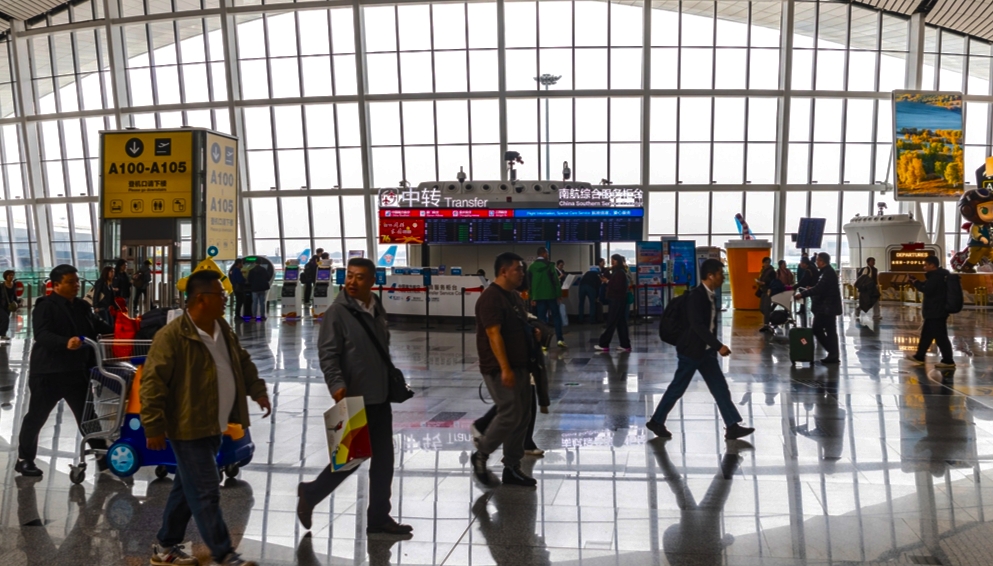
- Air travel and tourism from China to Japan have dropped notably, data from travel agencies and airlines showed, following China’s issuance of a travel advisory warning Chinese citizens of risks when visiting Japan after Japanese Prime Minister Sanae Takaichi made erroneous remarks on China’s Taiwan and refused to retrack her words.
- Meanwhile, Chinese tourists are shifting their travel destinations to other neighboring countries such as South Korea, Thailand and Singapore, data showed, causing anxiety among the tourism industry in Japan, media reported.
- From November 24 to December 31, the number of canceled flights from China to Japan increased by approximately 56 percent compared to the same period last month. Moreover, the booking volume of Chinese tourists for December and beyond was significantly lower than expected, according to statistics from industry information provider Umetrip.
- Meanwhile, statistics showed that out of 5,548 scheduled flights from China to Japan in December, more than 900 flights have been canceled, meaning a cancellation rate of 16 percent, according to a Nikkei report on Saturday.
More specifically, Chinese carriers had, by the morning of Thursday, slashed service on 72 routes, eliminating 904 flights and roughly 156,000 seats. The number of flight cancellation tripled the figure two days earlier, with Kansai International Airport near Osaka hit especially hard, according to Nikkei.
- Japanese media and tourism-related enterprises are increasingly worried that the damage could deepen further, if bilateral relations continue to deteriorate.
According to Japan National Tourism Organization statistics, approximately 8.2 million Chinese tourists visited Japan from January to October 2025, making them a vital source of revenue for Japan’s tourism and related industries
- Any additional flight reductions could seriously dampen tourism demand, and Japan has voiced growing concern over the potential blow to its travel and retail sectors, CCTV News reported.
The Imperial Hotel Tokyo told the Global Times that “regarding Chinese company-hosted banquets and accommodations, we have begun to see some postponements and cancellations.”
However, Chinese tourists are shifting their travel destinations to other neighboring countries and regions other than Japan, data from travel agencies showed.
According to data from travel platform Qunar, over the weekend of November 15 to 16, South Korea surged to become the No.1 booked outbound destination, followed by Thailand, Malaysia, Singapore, Vietnam, and Indonesia.
- Seoul also topped flight search volume as of November 17, followed by Bangkok. Notably, searches for Singapore, Sydney, and Bali each rose over 10 percent week-on-week
China-Japan air booking continues to drop in December, ripples reaching retail sector